

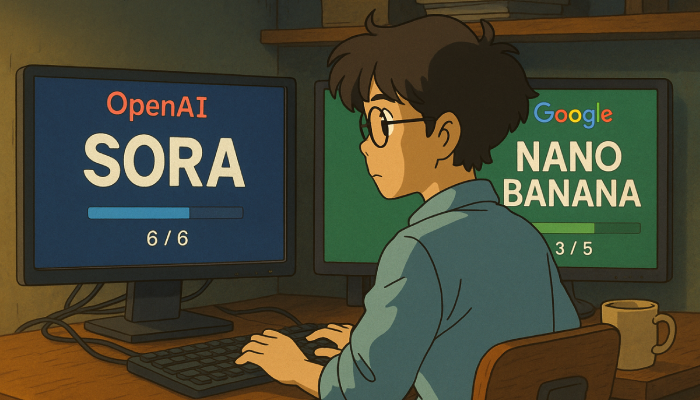
The booming demand for AI video generation and AI image creation tools has pushed both OpenAI and Google to introduce new daily limits for their popular models — OpenAI Sora and Google Nano Banana Pro. As millions of users experiment with next-gen creative AI, the surge has placed heavy strain on GPU resources, prompting temporary restrictions to maintain stability and ensure wider access.
According to reports, OpenAI has now capped free Sora video generation to six videos per day, marking the first significant usage policy change since the tool went viral. These limits do not apply to ChatGPT Plus or Pro paid subscribers, who continue to enjoy unrestricted generation capabilities. Additional generations can also be purchased.
“We’re setting usage limits for free users to 6 gens/day,” said Bill Peebles, Head of Sora at OpenAI, in a post on X. “Our GPUs are melting, and we want to let as many people access Sora as possible!” he added — highlighting the massive computational load placed on Sora’s real-time video synthesis engine.
The joke about “melting GPUs” echoes a previous comment from OpenAI CEO Sam Altman, who earlier quipped about hardware overheating when AI-generated Ghibli-style videos went viral. While top-tier GPUs from companies like Nvidia can degrade over years of heavy use, they are not at real risk of literally melting. Altman later clarified in a Bloomberg interview: “They were running really hot, but the metal was not actually melting.”
Google is reportedly implementing similar limits for its fast-growing Nano Banana AI platform — an advanced image generation model gaining attention for its creative output, speed, and mobile-friendly design. Both companies are racing to scale infrastructure as AI-generated videos, photos, and animations surge in popularity globally.
The rising demand underscores how AI-powered creativity tools — from text-to-video systems to hyper-realistic image generators — are becoming mainstream. But it also highlights an industry-wide challenge: limited GPU supply, increased power consumption, and the enormous cost of training and running large models at scale.
As OpenAI and Google manage resource constraints, industry experts predict that 2026 will see major investments in next-generation AI chips, cloud compute expansion, and new monetisation models designed to balance access with sustainability.
