

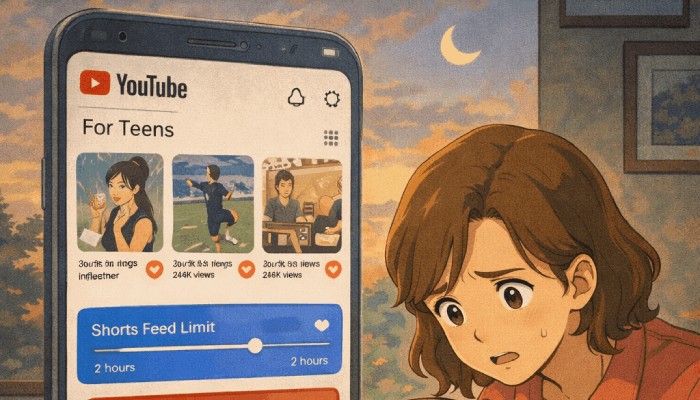
YouTube has announced a major update to its parental control and digital wellbeing tools, giving parents greater authority over how teenage users engage with YouTube Shorts, the platform’s short-form video feature. The update is designed to address growing concerns around screen-time addiction, doom scrolling, and the impact of infinite-scroll content on teens’ mental health.
In a blog post published on January 14, YouTube confirmed that parents managing supervised teen accounts will now be able to restrict or fully disable access to the Shorts feed. The new feature, called “Shorts Feed Limit,” allows parents to set daily viewing limits ranging from two hours down to zero minutes. Choosing the zero-minute option effectively removes Shorts from the teen’s YouTube experience, helping parents block short-form video consumption during school hours, study time, or bedtime.
The move comes amid increased scrutiny from regulators, educators, and child advocacy groups who argue that short-form video platforms encourage compulsive usage patterns and reduce attention spans among young users.
Expanded Digital Wellbeing and Supervision Tools
Beyond Shorts restrictions, YouTube is enhancing its family supervision features with more customizable wellbeing controls. Parents can now set personalised bedtime reminders and “take a break” alerts aligned with a child’s daily schedule, encouraging healthier viewing habits.
YouTube is also rolling out an improved account sign-up flow and profile-switching experience for families that share devices. The update makes it easier to switch between adult accounts and supervised teen profiles on smartphones and tablets, reducing accidental access to unrestricted content.
Smarter Algorithms for Teen Audiences
As part of the update, YouTube is refining its recommendation algorithms for younger users. The platform said it will prioritise videos that support learning, creativity, and emotional wellbeing, surfacing more content from trusted educational sources such as Khan Academy, CrashCourse, and TED-Ed.
Additionally, YouTube is strengthening protections against “unhealthy content loops,” limiting repetitive recommendations related to unrealistic body image standards or potentially harmful trends. These changes build on YouTube’s AI-based age estimation system, introduced in 2025, which automatically applies teen safety protections—even if an account is registered with an adult birthdate.
The announcement comes as governments worldwide intensify oversight of social media platforms, particularly around the psychological effects of infinite-scroll designs commonly referred to as “doom scrolling.” With this update, YouTube aims to position itself as a more responsible platform for teen safety, parental control, and digital wellbeing in an increasingly regulated environment.
