How India and the Middle East Are Shaping the Next Digital Decade?
The year 2026, viewed globally, equals the digit 1 (2+0+2+6 = 10 → 1+0 = 1), which symbolises new beginnings, freedom, and ruling. As the world moves toward 2026, technology is no longer evolving in isolation—it is converging with policy, infrastructure, and society at a scale never seen before. Nowhere is this transformation more visible than in India and the Middle East & Africa (MEA), two regions that are rapidly emerging as global testbeds for digital innovation, AI adoption, and next-generation infrastructure.
Unlike earlier waves of digitisation that focused primarily on connectivity and software adoption, the next phase of technological evolution is defined by intelligence, autonomy, and resilience. Governments and enterprises across India and MEA are no longer asking whether to digitise, but how fast they can modernise while ensuring security, sustainability, and regulatory alignment.
AI Moves From Experimentation to Infrastructure By 2026, artificial intelligence will shift from a productivity tool to a core digital utility across both regions. In India, AI adoption is accelerating beyond IT services into sectors such as manufacturing, agriculture, healthcare, banking, and logistics, driven by the need for scale, efficiency, and automation in a high-volume economy. Enterprises are embedding AI directly into workflows—powering predictive maintenance, fraud detection, demand forecasting, and citizen services.
In the Middle East, AI is becoming a strategic national asset. Countries such as the UAE and Saudi Arabia are positioning AI as a pillar of economic diversification, with AI-first government services, autonomous transport, smart cities, and sovereign AI models becoming mainstream by 2026. What distinguishes MEA’s approach is the strong alignment between AI strategy, regulation, and public infrastructure, allowing faster execution and experimentation at scale.
Across both regions, the rise of agentic AI systems—capable of reasoning, planning, and executing multi-step tasks—will redefine how work is designed and managed, particularly in finance, procurement, operations, and customer engagement.
Digital Infrastructure Becomes Strategic Capital The foundation of this transformation lies in next-generation digital infrastructure. India’s rapid rollout of 5G, edge computing, and cloud-native platforms is enabling real-time applications in smart manufacturing, connected mobility, and public safety. Simultaneously, government-led platforms such as digital identity, payments, and health records are creating interoperable digital ecosystems that private innovation can build upon.
In MEA, massive investments in hyperscale data centres, multi-region cloud infrastructure, and low-latency connectivity are positioning the region as a global digital hub. Data sovereignty and regional hosting are becoming critical priorities, particularly as regulations mature around AI governance, cybersecurity, and privacy. By 2026, enterprises operating across borders will increasingly rely on hybrid and multi-cloud architectures that balance compliance with performance.
IoT, Digital Twins, and Intelligent Operations The convergence of IoT, digital twins, and AI analytics will become central to operational efficiency in both regions. In India, industries such as logistics, energy, utilities, and transportation are using real-time sensor data to reduce downtime, improve asset utilisation, and lower emissions. Digital twins—virtual replicas of physical assets—are enabling predictive maintenance and scenario planning at unprecedented scale.
The Middle East is applying these technologies across oil and gas, utilities, aviation, and large infrastructure projects, where real-time visibility and automation directly impact safety, cost, and sustainability. By 2026, intelligent operations will move beyond dashboards to autonomous decision-making systems that continuously optimise performance.
Cybersecurity and Trust Take Centre Stage As digital systems become more interconnected, cybersecurity will evolve from an IT function to a board-level priority. India and MEA are witnessing a sharp rise in sophisticated cyber threats targeting critical infrastructure, financial systems, and supply chains. In response, organisations are shifting toward zero-trust architectures, AI-driven threat detection, and secure-by-design platforms.
Trust will also define the success of AI and digital transformation. Enterprises and governments alike are investing in explainable AI, verifiable data, and compliance-first design, recognising that adoption depends as much on confidence as on capability.
Sustainability and Tech-Led Decarbonisation By 2026, sustainability will no longer be a parallel initiative—it will be deeply embedded in technology strategy. Across India and MEA, AI, IoT, and data platforms are playing a critical role in tracking emissions, optimising energy usage, and enabling ESG compliance. From smart grids and electric mobility to green data centres and sustainable supply chains, technology is becoming the primary enabler of climate goals.
A Defining Moment for Regional Leadership What makes 2026 pivotal is that India and MEA are no longer following global tech trends—they are shaping them. With young digital populations, supportive policy frameworks, and ambitious national visions, both regions are poised to influence how AI, infrastructure, and digital services evolve worldwide.
As technology evolves from isolated tools into intelligent, interconnected systems, and automation gives way to true intelligence, India and the Middle East are emerging as key architects of the next digital era. Defined by scale, speed, and strategic purpose, this transformation sets the context for what lies ahead. Here’s what industry leaders shared with NewzOnClick on their expectations and priorities for the road ahead… But before that a Very Happy and Fruitful 2026 to all the readers.
AI’s Shift From Experimentation to Enterprise Impact in 2026
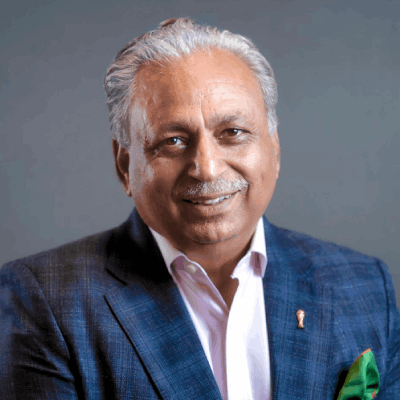
“As we close the year, it’s clear that real progress isn’t driven by isolated breakthroughs, but by consistent intent. 2025 marked a turning point as AI moved from experimentation to enterprise execution. As we enter 2026, the convergence of AI, quantum computing, edge intelligence, and human-centric design will define a new era, one where technology scales not just businesses, but human potential. For leaders, the mandate is clear: move beyond adopting new tools and focus on aligning technology with business goals, trust, and long-term impact.”
CP Gurnani, Co-Founder and Vice Chairman, AIONOS
India’s GCCs Shift From Scale to Precision and Innovation in 2026
“2025 marked a clear shifting point for India’s GCC landscape from giant, cost-focused delivery centers to smaller, high-impact, innovation-led GCCs. Increasingly, firms are setting up agile centers of 100–500 professionals working at the forefront of AI, cloud, cybersecurity, product engineering and R&D, where speed-to-value, IP ownership and strategic influence matter more than scale alone. Supported by India’s deep digital talent pool, a maturing Tier-2 ecosystem and faster go-live timelines, this model has become both commercially attractive and operationally efficient. As we move into 2026, this momentum will accelerate, driving demand for full-service partners who can seamlessly integrate strategy, talent, compliance and operations. The next phase of GCC growth in India will be defined not by size, but by precision, agility and long-term value creation.”
Monica Pirgal,CEO, Bhartiya Converge
India’s Office Market Shifts From Space Utilisation to Talent and Productivity in 2026
“For India’s commercial real estate, 2025 was a reset year, with a clear return-to-office push followed by renewed leasing momentum in core markets. And as occupiers revived physical work environments, demand sharply shifted towards well-placed, efficient workplaces that reduce commute friction and contribute to employee wellbeing. It was also a year of transition from standalone offices to integrated, mixed-use campuses that combined workspaces with daily amenities and social infrastructure. In 2026, leasing activity is expected to be supported by GCC expansion and technology-led enterprises while India will continue to benefit from its skilled workforce and innovation depth. Offices will, increasingly, be assessed not as cost centers but as productivity enablers, culture hubs and long-term talent retention tools.”
Hardeep Dayal, President – Commercial, Bhartiya Urban
GIS Emerges as India’s Digital Backbone for Predictive and Sustainable Growth
“In 2025, India’s geospatial journey saw tremendous acceleration, with GIS emerging as core digital infrastructure. The rapid expansion of the geospatial analytics market signals that spatial intelligence is now deeply embedded across governance, infrastructure development, climate action, and enterprise decision-making. The convergence of GIS with AI, drone and satellite imagery, GeoAI, IoT, and big data is enabling faster, more precise, and more proactive outcomes across sectors. This shift is helping organizations move from reactive responses to predictive and scenario-driven planning, whether in urban development, agriculture, disaster management, or public service delivery. Looking ahead to 2026, living digital twins will further accelerate this transformation by providing connected, real-time views of physical assets throughout their life cycles, while detailed imagery analysis and immersive technologies such as AR and VR will reshape how teams interpret and act on spatial insights in the field. GIS is no longer limited to mapping. It is becoming a mainstream platform that connects data, systems, and people, laying a strong foundation for India’s next phase of digital, resilient, and sustainable growth.”
Agendra Kumar, Managing Director, Esri India
From Conversational AI to Agentic Action: Enterprise AI’s Defining Shift in 2026
“Enterprises are no longer satisfied with AI that waits for instructions. They are demanding systems that understand context, anticipate intent, and act with confidence inside real operational environments. That shift became unmistakable in 2025 and fundamentally changed the conversation around what enterprises will expect from AI in 2026. 2025 also set the foundation for the next phase of enterprise AI adoption. Agentic AI moved from concept to capability, generative models shifted from experimentation to production impact, and enterprises began standardizing on AI systems that can reason, orchestrate, and act autonomously. As we look to 2026, this momentum accelerates. Agentic systems will become the default operating layer for customer operations, risk, and service workflows. Small Language Models and speech-to-speech architectures will drive higher precision, lower latency, and stronger compliance in regulated environments. Multimodal and real-time voice AI will unlock new interaction models, while sovereign and responsible AI frameworks will move from policy discussions to hard deployment requirements. With strong tailwinds from initiatives like the India AI Mission and growing global demand for trusted, production-grade AI, 2026 will not be about whether enterprises adopt agentic AI. It will be about who can deploy it at scale, securely, and with measurable outcomes. 2026 will be the year AI agents move from conversation to action and become embedded into core enterprise workflows.”
Ganesh Gopalan, Co-Founder & CEO, Gnani.ai
Cryptography and Cybersecurity Become the Foundation of the Digital Economy in 2026
“2025 marked a decisive acceleration in digital innovation, with payments, connectivity, and digital ecosystems becoming more seamless, secure, and interconnected than ever before. As we look ahead to 2026, cryptography and cybersecurity will define the digital economy, as trust becomes fundamental to every real-time transaction and software-driven system. Next-generation cryptographic libraries, advanced hardware security modules, and crypto agility will enable security to operate seamlessly from edge devices to cloud platforms processing billions of transactions, while safeguarding keys and data as the industry transitions toward quantum-resistant standards. Together, these capabilities will underpin trusted payments, secure communications, resilient digital infrastructure, and national cybersecurity in the post-quantum era.”
Matthew Foxton, India Regional President & Executive Vice-President, Branding & Communications, IDEMIA Group
India’s Education Shift Toward Skill-Based, AI-Driven and Global Learning in 2026
“In 2025, we observed a significant shift toward skill-based learning, advanced AI integration, multidisciplinary approaches, and stronger collaboration between industry and academia. Key trends included hyper-personalised blended learning, research-driven and innovation-led higher education along with internationalisation to boost global competitiveness. As India positions itself as a knowledge leader in the global economy, we anticipate more decentralised learning and increased investment in Education 5.0. Our approach at Mahindra University remains holistic, student-centric, and interdisciplinary, fostering knowledge exchange through global partnerships and prioritising experiential learning to prepare students for industry.”
Dr. Yajulu Medury, Vice Chancellor, Mahindra University
Sustainability Moves From Commitments to AI-Led Climate Action in 2026
“In 2025, the sustainability sector transitioned from aspirational commitments to operational priorities. Notable trends included an increased emphasis on biodiversity and social equity within environmental, social and governance (ESG) frameworks; expanded adoption of artificial intelligence–driven insights; integration of circular economy principles; decarbonisation of supply chains; and an accelerated shift towards renewable energy. The urgency of climate change has further propelled the transition to a low-carbon economy, facilitated by advanced technologies and initiatives such as the emergence of a biodiversity credit market. Looking ahead, we anticipate continued progress in resource management, environmental stewardship and emissions reduction, alongside greater investment in artificial intelligence, climate adaptation and resilient infrastructure. At Mahindra University, we remain committed to a comprehensive approach that advances environmental education and equips students to address sustainability challenges through practical, solution-oriented learning.”
Anirban Ghosh,Head – Centre for Sustainability, Mahindra University
Climate Tech Moves From Ambition to Scaled Impact in 2026
“2025 proved that climate tech and climate funds have firmly shifted from aspiration to execution, reflecting a growing global commitment to solutions with measurable impact. It was also a year that reinforced the need to align innovation with long-term resilience. As we step into 2026, I expect biofuels to become a critical decarbonization lever, lithium ecosystems to grow more circular, urban mobility to evolve closer to low-carbon systems, and data centers to start moving towards energy efficiency. India will also drive the mandate for carbon emission monitoring and reporting for high-emission industries. Circularity and resource efficiency will start to evolve into central pillars of climate strategy, while climate adaptation technologies gain rapid traction. The year ahead marks a decisive transition from experimentation to wider deployment of multiple innovations from resilient energy storage to carbon-negative materials. Policy, Technology and capital are now positioned to drive lasting change toward a low-carbon, climate-secure future.”
Vasudha Madhavan, Founder and CEO, Ostara Advisors
Employee Commute Emerges as a Key ESG and AI-Led Mobility Lever in 2026
“2025 was a strong year for Routematic, marked by consistent growth and measurable environmental impact. As India’s GCC ecosystem expanded and enterprises scaled multi-shift operations, employee commute became a strategic focus, accelerating the shift toward AI-led, data-driven commute solutions. Smarter routing, cleaner fleets, and employee well-being are now central to how organisations think about transport, with employee commute emerging as one of the most practical ways to reduce Scope 3 emissions and strengthen ESG outcomes. As India progresses towards its net-zero goals, growing GCC demand, will further accelerate the need for safe, technology-enabled, sustainable, shared employee commute. Looking to 2026, I am genuinely optimistic about what lies ahead for Routematic and the industry, as AI, shared mobility and EV adoption come together to create scalable, future-ready impact for modern workplaces.”
Sriram Kannan, Founder & CEO, Routematic
India’s Space Economy Shifts From Launches to Real-World Intelligence
“2025 has been a defining year for India’s downstream space ecosystem. As launch capacity improves and satellite constellations scale up, the real value creation is now shifting closer to applications, analytics and decision making. From agriculture and climate monitoring to infrastructure planning and national security, satellite data is steadily moving from being a niche input to a mainstream business and governance tool. What is encouraging is the growing maturity of demand, where enterprises and governments are no longer asking if space data can help but how quickly it can be operationalised. For companies like Suhora, this has reinforced the importance of building reliable intelligence layers on top of Earth observation data, focused on accuracy, speed and relevance. As we move into 2026, the opportunity lies in translating India’s space capabilities into everyday insights that solve real world problems at scale.”
Amit Kumar, Co-Founder and COO, Suhora Technologies
From Digital Expansion to Intelligent Performance: India’s Tech Shift in 2026
“2025 was a year of purposeful digital transformation where the conversation shifted from mere expansion to agile performance. As we look to 2026, the industry will double down on building secure, scalable, and intelligent digital foundations. Smarter automation, stronger network resilience, and cloud architectures designed for speed and performance will define the next phase of growth. At Invenia-STL Networks, we’re partnering with enterprises to strengthen their digital core and lead an increasingly dynamic landscape. The companies that invest early in security, performance, AI adoption, and operational clarity will lead the next wave of India’s digital acceleration.”
Mr. Pankaj Malik,CEO & Whole-time Director, Invenia-STL Networks
Redesigning Education: From Fixed Syllabi to Future-Creators in 2026
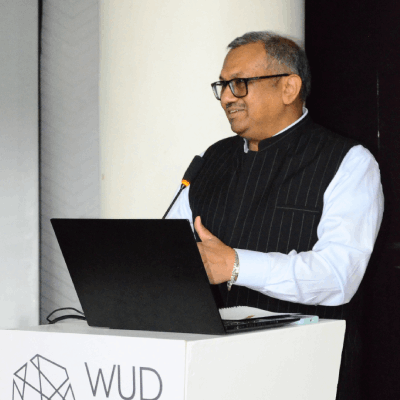
“The future will not be built by those who just follow a long-established syllabi, but by those who have the courage to question, dismantle and redesign them. At World University of Design, 2025 was not a year of incremental progress or cosmetic innovation, it was a year of deliberate disruption. We reaffirmed ourselves to the belief that education must evolve from the transfer of information to the cultivation of imagination, agency and critical intelligence. We are stepping into 2026 with the conviction that the future of our students depends on what they will dare to reimagine, what systems they will challenge, what conventions they will outgrow, and what futures they will author. In a world defined by volatility, artificial intelligence and accelerating complexities, WUD stands committed to nurturing designers who refuse passive compliance, who see uncertainty as a creative frontier, and who transform bold ideas into frameworks for more intelligent, equitable and humane ways of living.”
Dr. Sanjay Gupta, Vice Chancellor, World University of Design
AI and Sovereign Cloud to Take Center Stage in 2026
Faiz Shakir, VP & MD, India and ASEAN
“2025 reinforced a simple truth. AI is no longer experimental. It has become foundational to how organisations operate and compete. As we move into 2026, the focus will shift from simply adopting AI to putting it to work in ways that deliver measurable resilience, efficiency, and customer outcomes. The question leaders are asking is no longer whether to use AI, but where it can create the most meaningful impact.
At the same time, the cloud conversation is evolving. It is moving away from questions of ownership toward questions of governance. Who controls the data, how it is protected, and where it can be processed are becoming central concerns. This shift is why sovereign and distributed cloud capabilities are moving from niche requirements to mainstream priorities for enterprises and governments alike.
Our recent platform advances are designed to help organisations run modern applications and AI wherever data and regulations require, without compromising operational consistency or security. India, in particular, has emerged as a strategically important market in this transition. Customers here are adopting modern, sovereign-ready hybrid platforms at pace, and our continued investments in local R&D and partnerships reflect that momentum.
Looking ahead to 2026, we can expect more pragmatic AI adoption, wider sovereign cloud deployments, and closer collaboration between technology providers and local ecosystems to ensure innovation remains both powerful and accountable.”
Customer-Specific AI Emerges as the New Competitive Advantage
“As we move toward 2026, India’s technology sector is entering a phase where scale, accountability, and outcomes matter more than momentum alone. The industry has built strong foundations across AI, cloud, cybersecurity, and digital platforms, supported by deep talent and a mature ecosystem of startups, GCCs, and global enterprises. The next chapter is about converting capability into sustained business and societal impact.
AI adoption is becoming sharper and more grounded in real use cases. Enterprises are asking clearer questions around productivity, resilience, and trust. They expect technology to integrate seamlessly into core processes, not sit at the edges as experimentation. This shift places responsibility on the industry to design solutions that are secure, explainable, and aligned with long-term value creation.
India is well positioned to lead this phase. Our strength lies in combining engineering depth with domain understanding and scale execution. As an industry, success in 2026 will depend on how well we collaborate across ecosystems, invest in skills, and apply technology with purpose. The opportunity ahead is significant, to strengthen enterprises, empower people, and reinforce India’s role as a trusted global technology partner.”
Customer Innovation Services Focused:
“By 2026, the real measure of AI success will be its ability to deliver consistent, context-aware outcomes for customers. We are seeing a clear shift away from generic intelligence toward AI that understands the nuances of an enterprise, its data, processes, policies, and customer behaviours. Customer-specific AI performs better because relevance drives decisions, not raw intelligence alone.
At Customer Innovation Services, we work closely with organisations to embed intelligence directly into their customer-facing processes. Whether it’s dispute resolution, returns management, service exceptions, or claims handling, value emerges when AI is trained on enterprise context and evolves alongside business rules and customer expectations. This approach allows companies to scale complexity while retaining control, governance, and accountability.
Over time, customer-specific AI becomes a durable differentiator. It compounds learning from real interactions, strengthens decision quality, and augments human judgment rather than replacing it. Across industries, from manufacturing and retail to financial services and healthcare, we see embedded intelligence driving faster resolution, greater consistency, and improved customer trust. As enterprises look ahead, the focus is clear. AI must move from novelty to reliability. The strongest advantage will come from intelligence that genuinely understands how a business operates and how it serves its customers every day.”
SAP Labs India Focused: “As we move toward 2026, SAP Labs India is strengthening its position as a global AI powerhouse within SAP’s innovation ecosystem. Our focus is to build AI that is enterprise-grade, responsible, and deeply embedded into how businesses operate. This starts with talent. Across SAP Labs India, we continue to invest in strong engineering depth, applied AI skills, and cross-disciplinary expertise that brings together product thinking, domain knowledge, and data science.
Equally important is the innovation mindset we are cultivating. Teams are encouraged to think AI-first, design with scale in mind, and move quickly from ideas to real outcomes. This mindset shapes how we build platforms, develop products, and collaborate across SAP globally. AI is no longer a separate capability, it is becoming part of everyday decision-making, development, and delivery.
We are also focused on empowering our people to lead this shift. Through continuous learning, hands-on experimentation, and shared ownership, we are enabling engineers to apply AI with confidence and responsibility. As adoption accelerates across industries, SAP Labs India will continue to push boundaries, setting benchmarks for how AI is built, applied, and scaled to create lasting value for customers worldwide.”
AI-Driven, Secure and Inclusive: Powering the Future of Insurance for Bharat
Sriram Naganathan, President & Chief Technology Officer, HDFC ERGO General Insurance
“In 2025, we harnessed the power of AI, data, and other digital tools to make services seamless, accessible, and secure for every customer. Being mindful of the roadmap of the evolving needs of the customers to have insurance access anywhere, anytime, we adopted new technologies and successfully migrated to a more advanced and future ready platform, enabling us with faster turnaround times, ability to scale up significantly and higher accuracy of delivering services to our customers. As digital safety takes the centre stage of all discussions today, we also strengthened our focus on cybersecurity measures to safeguard trust in an increasingly digital world.
Alongside, to cater to the growing demands of today’s customers, we continue to liaison with the InsurTechs – inviting fresh ideas to harness the power of technology to ensure better service delivery. The second edition of TechPreneur, an open platform to invite new ideas from start-ups across the country, is a testimony to this effort. Our commitment to sustainable innovation also continues to evolve with couple of initiatives from the innovation lab at HDFC Ergo IIT Bombay going live. As we look ahead to 2026, I anticipate technology and innovation to play a bigger role to fulfil our mission to deliver AI powered and hyper-personalised experiences to our customers in a consistent sustainable fashion, thus enabling us reach across the remote corners of Bharat. By deploying cutting-technology with a deep understanding of our customers, we are committed to building an agile, impactful ecosystem that makes every life we touch more secure and hassle-free.”
“The telecommunications infrastructure landscape has reached a critical threshold where capacity, density, and deployment speed determine competitive advantage. India installed over 5 lakh 5G base stations, achieving 85% population coverage, while total wireless data reached 65,009 petabytes in Q2 2025—an unprecedented surge that makes fiberization not optional but existential for network quality. Simultaneously, hyperscale operators now command 44% of global data center capacity with 1,189 large facilities, and this concentration is accelerating. HFCL recognized early that these parallel infrastructure buildouts would require fundamentally different but equally critical solutions. Our response has been deliberate: maximizing production capacity across our manufacturing facilities in India to serve domestic demand from BharatNet and 5G densification globally, while simultaneously ramping up Intermittently Bonded Ribbon cable manufacturing—a technology that enables mass fusion splicing and multiplies fiber density compared to traditional cables. This cable is specifically engineered for hyperscale data center interconnects where installation speed and space constraints are paramount.
Beyond fiber infrastructure, HFCL has emerged as the first company in India to design, develop, and manufacture 5G Fixed Wireless Access equipment for giga-speed wireless broadband connectivity. We have already supplied more than half a million 5G FWA units in the current year across leading 5G operators in the country, enabling rapid last-mile deployment without fiber-to-the-home constraints. This positions us uniquely at the intersection of wireless and wireline convergence. In the backbone infrastructure space, our IP/MPLS Router solutions command more than 60% market share in BharatNet, connecting subscribers from Himachal Pradesh to Andaman & Nicobar Islands in one of the largest deployments of IP/MPLS Routers anywhere. This demonstrates our capability to deliver mission-critical networking equipment at scale across India’s most challenging geographies. We have systematically expanded into Europe and North America, while building local partnerships as global hyperscale capacity expands rapidly to support AI and cloud workloads. HFCL has positioned itself comprehensively—from rural connectivity to high-density data center interconnects, from active 5G equipment to passive fiber infrastructure, from edge routers to core networking—with the manufacturing depth, technology leadership, and global footprint required to help define, and defend, the infrastructure standards of the digital economy.”
Mahendra Nahata, Managing Director, HFCL
“As we commence 2026, the outlook for the industry looks promising. We are witnessing strong momentum across mobile networks, fixed wireless access, and fixed broadband as data consumption continues to grow nationwide. This surging data growth and emerging use cases will drive substantial investment in network expansion and upgrades.Our Chennai factory continues to deliver telecom solutions at scale for domestic and global markets, while our R&D centres in Bangalore and Chennai are pioneering next-generation technologies. Through deep partnerships with leading operators and our commitment to sustainable, energy-efficient networks, we have established ourselves as a trusted partner in building India’s resilient digital infrastructure. Looking ahead, the industry will be increasingly defined by AI-driven network automation and the expansion of data centres and transport infrastructure to support cloud and edge workloads. We are committed to delivering cutting-edge solutions and scalable infrastructure that advance India’s digital and AI ambitions.”
Tarun Chhabra, Sr. Vice President and Country Head, Nokia India
“2025 was a year of purposeful digital transformation where the conversation shifted from mere expansion to agile performance. As we look to 2026, the industry will double down on building secure, scalable, and intelligent digital foundations. Smarter automation, stronger network resilience, and cloud architectures designed for speed and performance will define the next phase of growth. At Invenia-STL Networks, we’re partnering with enterprises to strengthen their digital core and lead an increasingly dynamic landscape. The companies that invest early in security, performance, AI adoption, and operational clarity will lead the next wave of India’s digital acceleration.”
Pankaj Malik, CEO & Whole-time Director, Invenia-STL Networks
“As 2026 approaches, India has emerged as a global engine of digital innovation, with consumers demanding flagship performance and hyper-intelligent experiences. Intelligence is rapidly democratizing—we are empowering users with ‘On-Device Generative AI’. Generative and Agentic AI will soon become central to edge-device experiences, while 5G and satellite (NTN) convergence will ensure seamless connectivity, even in the remotest areas. At MediaTek, we see India as both a key market and a hub of engineering excellence, shaping the global semiconductor landscape. With deep R&D roots, we are advancing 5G and edge AI through the Dimensity 5G series and driving smart vehicle innovation via Dimensity Auto. From smartphones and intelligent homes to satellite connectivity and next-gen automotive platforms, MediaTek is enabling a smarter, more connected world.”
Anku Jain, Managing Director, MediaTek India
“The Indian telecom industry remained central to the country’s digital growth in 2025, with the overall subscriber base reaching 1.2 billion by November and teledensity rising to 86.76 per cent. Wireless broadband continued to dominate with 954.99 million users compared to 44.82 million wireline connections, supported by rapid 5G adoption that rose to 394 million subscriptions by the end of the year, according to the Ericsson Mobility Report. Network expansion was equally strong as India crossed 5.15 lakh 5G BTS sites and average mobile data usage touched 36 GB per month, with a forecast of 65 GB by 2031. Fixed Wireless Access also grew steadily with subscribers rising to 13.18 million in October across both urban and rural markets. Moreover, telecom exports from India have increased by 72% in the last 5 years, increasing to Rs. 18,406 crores in FY25, from Rs. 10,000 crores in FY21. The year saw a sharper focus on resilience and self-reliance with operators enhancing cyber defence capabilities through AI-based fraud detection and cloud-security investments that protected millions of users from malicious calls and links. Domestic manufacturing gained momentum under Make-in-India and PLI schemes enabling nearly 60% import substitution in telecom products and turning India into an emerging exporter of 4G and 5G equipment. These advances, combined with continued operator investment in automation and predictive maintenance, positioned the sector for the Bharat 6G Vision which targets a 10% contribution to global 6G patents supported by national testbeds and research initiatives. Policy and Regulatory Milestones: 2025 was also a year of important regulatory developments as the sector moved to align with the new Telecommunications Act, 2023 and the evolving framework for service authorisations. The industry has consistently emphasized that the new authorisation regime should retain the contractual certainty of the current licensing framework to support long‑term investments. The Hon’ble Telecom Minister Shri Jyotiraditya Scindia set an ambitious target for the industry to contribute 20% to India’s GDP in the next decade. The draft National Telecom Policy correctly identifies this strategic direction and we are engaged in a constructive dialogue with the Government to fine-tune the specifics, but the overall vision aligns with the industry. The policy must cement telecom’s role as a national enabler, not just another vertical industry. The Government has also supported telecom operators with policies like the right of way (RoW), but still several authorities continue to charge exorbitant fees for laying network elements. Spam, Fraud and the App based communication services Gap: A defining theme of 2025 was the focused effort to tackle spam calls, scam messages and digital frauds that erode consumer trust. Telecom operators have already implemented a wide range of measures under TRAI’s TCCCPR framework including PE–TM binding, DLT‑based header and content registration and analytics‑based spam tagging on voice and SMS. Building on this, all operators successfully rolled out the P/S/T/G suffix system for commercial SMS headers this year, which helps users instantly identify whether a message is promotional, service‑related, transactional or from the Government. These efforts have delivered noticeable reductions in spam on traditional channels. However, a growing share of unsolicited and fraudulent communication has shifted to App based communication services which currently sit outside the telecom regulatory framework. The industry has repeatedly highlighted that this gap not only weakens consumer protection but also adds to the broader financial strain on telecom networks. An important milestone in this context was the DoT’s landmark decision to mandate SIM‑binding for app‑based communication services, a first‑of‑its‑kind measure globally. Persistent SIM‑binding ensures that a communication app remains continuously linked to the verified mobile SIM and number used during registration, significantly improving accountability and traceability in cases of fraud or misuse. Telecom operators have strongly supported this step, viewing it as a critical layer in India’s defence against rising cyber frauds and platform abuse. Private Networks, Spectrum and Infrastructure Challenges: The year also saw active debate around captive private 5G networks and direct spectrum allocation to enterprises. The industry’s position remains that India’s extensive public mobile coverage makes the conventional justification for independent private networks largely inapplicable in most geographies and that enterprise 5G needs are best served through spectrum leasing and network slicing by licensed telecom operators. This model ensures efficient spectrum utilization, avoids interference risks and maintains national security safeguards such as lawful interception and traceability which may be harder to enforce in fragmented private deployments. On the spectrum front, the 6 GHz band continued to be a key concern. Global studies have underlined that mid‑band spectrum in the order of 2 GHz will be needed to meet 5G traffic growth and the industry has reiterated the importance of assigning the upper 6 GHz band for IMT services rather than unlicensed use, while also calling for stronger enforcement against illegal Wi‑Fi 6E devices sold via e‑commerce platforms. The WRC 2027 (World Radiocommunication Conference 2027) will be a critical forum for finalizing the global use of the 6 GHz spectrum band, with the Indian telecom operators advocating strongly for its allocation to licensed mobile services (5G and future 6G) via auction. Recognizing this urgency, the Government of India took a landmark step this year by approving the refarming of 687 MHz of spectrum previously held by government agencies such as Defence and ISRO. This initiative, strongly backed by the telcos, raises India’s total IMT spectrum from 900 MHz to approximately 1,587 MHz, a game-changer in addressing network capacity constraints. The Government has also taken strong steps to protect network quality by curbing the illegal sale of mobile signal boosters and jammers online. New e‑commerce guidelines notified in mid‑2025 explicitly prohibit listing such equipment, directly addressing an issue the industry has raised for years due to the interference and degradation these unauthorised devices cause. The telcos have also urged the Government to reform the spectrum allocation and pricing regime. We believe that the current auction-driven model, combined with high input costs, poses a threat to the financial sustainability of the telecom sector. The spectrum pricing should align with present-day market realities, not legacy revenue expectations. The current method of auctions has been designed more for vertical spaces in telecom. But now, with telecom becoming a horizontal enabler, a new algorithm has to be designed by the Government and by TRAI, taking into account that this is a foundational sector. Digital Trust, Convergence and the Road Ahead: Across all these developments, the common thread in 2025 was digital trust. Parliamentary recommendations on converging the Telecom, IT and Broadcasting Ministries under a unified umbrella for better policy coherence reflect how deeply communications now cuts across sectors. The industry has welcomed this direction, especially for cross‑channel issues like spam and fraud, that span both networks and App based communication services, and therefore, demand uniform policy treatment. As 2025 closes, the sector’s focus is firmly on strengthening digital trust and ensuring that future networks are secure, reliable and inclusive. With the foundations for 5G scale, spectrum reform and unified safeguards now in place, India’s telecom industry is moving into a phase where innovation and trust will define competitiveness, setting the stage for a decade of resilient and globally benchmarked digital connectivity.”
Lt. Gen. Dr. S.P. Kochhar, Director General, Cellular Operators Association of India (COAI)