

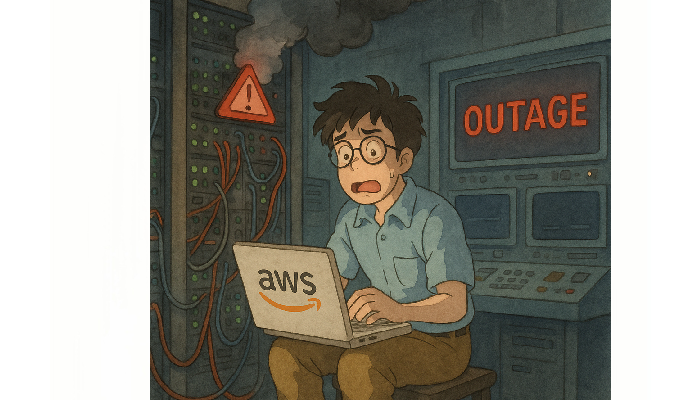
Amazon Web Services (AWS), the leading global cloud computing platform, experienced a massive outage that disrupted critical internet services worldwide, exposing the growing dependency on AWS for digital infrastructure and cloud operations. The incident triggered widespread downtime for major applications, banking platforms, airlines, and smart devices, affecting millions of users across over 60 countries.
The outage originated in AWS’s US-EAST-1 region located in Northern Virginia, where a faulty update to the core DynamoDB database API triggered cascading failures across AWS services. This malfunction caused severe Domain Name System (DNS) resolution errors, halting communication between applications and AWS infrastructure components, resulting in failures across 113 AWS services including Elastic Compute Cloud (EC2) and Simple Storage Service (S3).
Key platforms impacted by the outage included Amazon’s own eCommerce site, Prime Video, Snapchat, Pinterest, WhatsApp, Apple Music, Zoom, Slack, Roblox, Fortnite, and Venmo. Additionally, smart home devices such as Ring doorbells and Alexa services went offline, while financial giants including Coinbase and major airlines like Delta and United reported operational disruptions. Government and media outlets also faced interruptions, highlighting the extensive ripple effect across diverse sectors.
Despite immediate mitigation efforts by AWS engineers, service restoration took several hours. AWS confirmed gradual recovery beginning at 10:11 GMT, while some users reported ongoing issues with message backlogs and reduced performance the following day. This outage marks the third significant incident in five years associated with the US-EAST-1 data center cluster, emphasizing the risks of concentrated cloud service dependency.
Analysts warn that as enterprises increasingly adopt multicloud strategies to enhance resilience and flexibility, reliance on a single cloud provider’s core services like AWS DynamoDB introduces operational and cybersecurity risks. The outage underscores the urgency for organizations to implement robust disaster recovery, cloud redundancy, and comprehensive monitoring across multiple cloud regions.
AWS and industry experts reaffirm their commitment to improving infrastructure reliability, advocating for multi-region designs and improved failover protocols to prevent similar large-scale disruptions. For digital businesses, the incident serves as a stark reminder of the critical importance of cloud infrastructure resilience in sustaining business continuity and customer trust in an increasingly connected world.
