

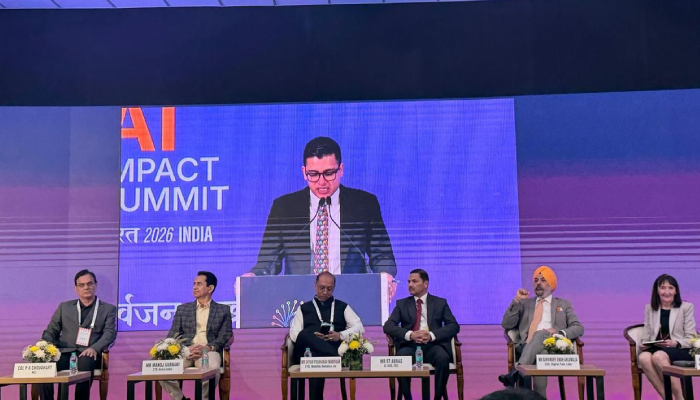
COAI, DoT and STPI spotlight AI-native telecom networks at India AI Impact Summit 2026.
The Cellular Operators Association of India (COAI), in collaboration with the Department of Telecommunications (DoT) and Software Technology Parks of India (STPI), hosted two high-level sessions at the India AI Impact Summit 2026, underscoring the foundational role of telecom infrastructure in enabling India’s AI-led transformation.
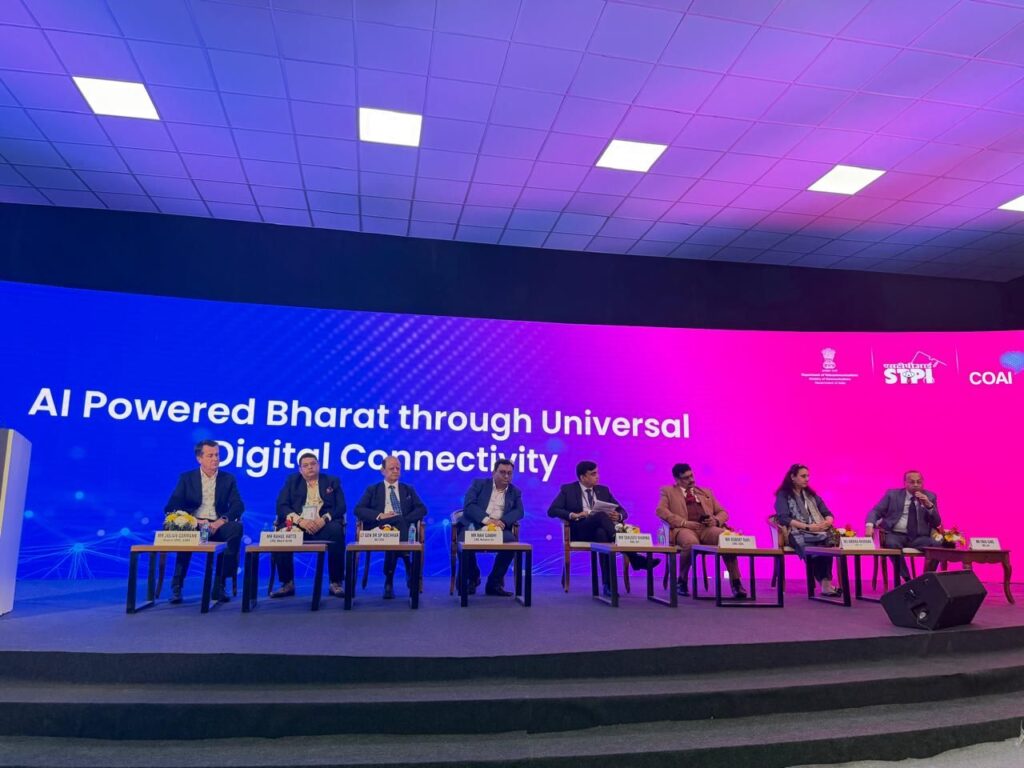
The sessions—“Generative AI and Future Networks” and “AI Powered Bharat through Universal Digital Connectivity”—brought together policymakers, telecom operators, technology leaders, and ecosystem stakeholders to examine how next-generation connectivity will underpin large-scale AI deployment across governance, enterprise, and public services.
Industry consensus during the discussions highlighted that the convergence of compute, connectivity, and data will define the next phase of digital transformation. As AI applications expand—from enterprise automation to citizen-facing digital services—robust, secure, and future-ready telecom networks will be critical to ensuring reliability, scalability, and trust at population scale.
Telecom as the Foundational Layer of India’s AI Ecosystem
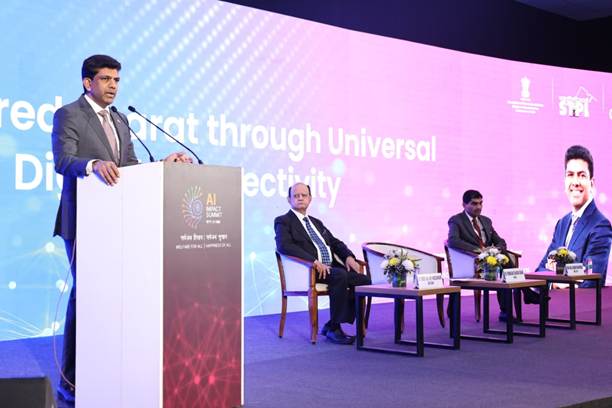
Dr. Pemmasani Chandra Sekhar, Hon’ble Minister of State for Communications, emphasized that telecom connectivity forms the bedrock of India’s AI ambitions. He noted that without resilient and secure telecom networks, AI cannot scale effectively to serve a billion citizens. India’s strong digital infrastructure, he added, presents a unique opportunity to deploy AI inclusively, strengthen governance frameworks, and position the country as a global AI leader.
Generative AI and AI-Native Telecom Networks
The “Generative AI and Future Networks” session explored how AI will not only run on telecom infrastructure but fundamentally transform it. Experts outlined how emerging standards such as 5G Advanced and the evolution toward 6G will embed AI deeply into network architecture, enabling intelligent automation, predictive maintenance, autonomous optimization, and enhanced service quality.
The session featured senior representatives from DoT, including Anil Kumar Bharadwaj and Syed Tausif Abbas, alongside industry leaders such as Shyam Prabhakar Mardikar of Reliance Jio Infocomm Ltd, Jeanette Whyte of GSMA, Manoj Gurnani of Nokia India, and other technology experts.
Participants observed that AI-native networks will become self-optimizing systems capable of dynamically managing traffic, improving spectral efficiency, and enhancing user experience, thereby forming the digital spine of an AI-driven economy.
Universal Connectivity for AI-Powered Bharat
The second session, “AI Powered Bharat through Universal Digital Connectivity,” focused on leveraging India’s extensive telecom footprint to democratize access to AI services across healthcare, education, agriculture, and governance.
With over a billion connected citizens, India’s telecom infrastructure provides a ready backbone for inclusive AI adoption. Industry leaders from DoT, Bharat Sanchar Nigam Limited, Bharti Airtel, Reliance Jio, Vodafone Idea Limited, and GSMA discussed how universal connectivity can ensure equitable access to AI-powered services while safeguarding digital trust.
Participants also highlighted the emerging impact of quantum technologies and the need for telecom networks to evolve as secure, resilient digital infrastructure platforms capable of supporting next-generation applications.
Strengthening Digital Trust and Global Leadership
Lt. Gen. Dr. S.P. Kochhar, Director General, COAI, stated that telecom networks are central to building an AI-powered Bharat. As AI scales across sectors, telecom infrastructure must transition into intelligent, AI-native platforms that support secure and inclusive growth.
He emphasized that telecom operators are already deploying AI-driven network intelligence to proactively detect spam, fraud, and malicious communications, strengthening digital trust. Continued investment in advanced connectivity and secure infrastructure, he added, will be vital for India to lead globally in AI-enabled digital transformation.
COAI concluded that India’s scale of connectivity, rapid digital adoption, and leadership in digital public infrastructure uniquely position the country to emerge as a global AI powerhouse. As the industry advances toward 6G and AI-native networks, strengthening telecom infrastructure will remain central to sustaining India’s competitive edge in the global digital economy.
