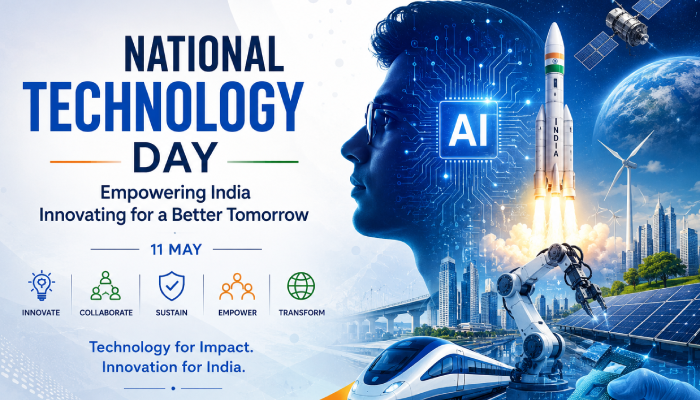
Observed every year on National Technology Day (May 11), this occasion marks a defining moment in India’s journey toward becoming a global technology powerhouse. Originally commemorating the success of the Pokhran nuclear tests in 1998, the day has evolved into a broader celebration of innovation, scientific excellence, and the transformative power of technology across industries.
Today, the significance of National Technology Day extends far beyond its historical roots. It serves as a reflection point for how rapidly advancing technologies—such as artificial intelligence (AI), semiconductor manufacturing, cloud computing, cybersecurity, and digital infrastructure—are reshaping India’s economic and industrial landscape. From startups to large enterprises, organizations are leveraging cutting-edge solutions to drive efficiency, unlock new revenue streams, and compete on a global scale.
The impact on the industry is profound. India is witnessing accelerated growth in sectors like AI-driven enterprise solutions, electric mobility, fintech, health tech, and deep tech innovation. Government initiatives such as Digital India, Make in India, and the India Semiconductor Mission are reinforcing the country’s position as a strategic hub for technology development and manufacturing. These efforts are not only boosting domestic capabilities but also attracting global investments and partnerships.
Equally important is the role of technology in enabling inclusivity and scalability. Digital platforms are bridging gaps in education, healthcare, and financial services, ensuring wider access and participation in the digital economy. Meanwhile, advancements in data sovereignty, cybersecurity, and AI governance are helping organizations build trust and resilience in an increasingly complex digital environment.
However, this rapid adoption also brings challenges—ranging from regulatory gaps and data privacy concerns to skill shortages and infrastructure demands. National Technology Day underscores the need for a balanced approach that combines innovation with responsible governance, ensuring sustainable and secure growth.
Ultimately, the day is a reminder that technology is no longer just an enabler—it is a strategic driver of national progress. As India continues to innovate at scale, National Technology Day highlights the country’s commitment to shaping a future powered by intelligent, inclusive, and globally competitive technology ecosystems.
Below are the Industry Excerpts shared with NewzOnClick…
India’s Tech Surge: AI, Blockchain and Digital Innovation Driving the Next Growth Wave
Mr. Anuj Garg, Head of Engineering, ZebPay
“India’s technology ecosystem is entering a defining phase of growth, powered by rapid advancements in AI, blockchain, cloud computing, and digital public infrastructure. According to Nasscom, the Indian tech industry is projected to grow by 6.1% to reach $315 billion in revenue in FY26, highlighting India’s expanding role as a global hub of technology and innovation. Enterprises are increasingly building and scaling next-generation digital solutions from India for global markets, reinforcing the country’s position at the forefront of digital transformation. Among these transformative technologies, blockchain is steadily evolving into a foundational layer for trust, transparency, and financial innovation. The year is witnessing rising institutional adoption, with global financial players increasingly exploring tokenization, stablecoins, and blockchain-powered settlements at scale. Beyond finance, blockchain adoption is accelerating across industries such as healthcare, supply chains, and governance, where organizations are evaluating applications ranging from decentralized identity systems to real-time digital transactions and infrastructure modernization. As technologies like AI and blockchain continue to converge, the industry’s focus must remain on building secure, compliant, and user-centric ecosystems that encourage innovation while strengthening consumer trust. At ZebPay, we remain committed to enabling responsible participation in the digital asset economy through education, security, and innovation. As India continues to strengthen its position as a global technology powerhouse, we believe blockchain and digital assets will play an increasingly important role in shaping a more inclusive, efficient, and future-ready financial ecosystem for millions.”
Responsible Innovation for Inclusive, Trust-Centered Digital Transformation
C.P. Gurnani, Co-Founder and Vice Chairman, AIONOS
“The true measure of technology lies in its impact on humanity. Responsible innovation today is about building trust as much as it is about building technology. As digital ecosystems expand, enterprises must prioritize secure, ethical and inclusive digital transformation. At AIONOS, we see innovation as a force that should empower businesses of all sizes, foster digital sovereignty and create equitable opportunities in a connected world. Growth is truly inclusive only when technology is designed with accountability, resilience and people at its core.”
Powering Inclusive Growth Through Responsible and Accessible Innovation
Mr. Anku Jain, Managing Director, MediaTek India,
“India’s technology landscape is rapidly transitioning from a cost-efficient IT services base to a high-value global innovation hub, with IT spending projected to exceed $176 billion. It has become a primary driver of inclusive growth, creating massive opportunities across the economy. We see a future where responsible innovation bridges the digital gap, ensuring that cutting-edge technology is both accessible and sustainable. At MediaTek, our vision is to power inclusive growth by enabling high-performance, energy-efficient technologies that reach billions, from smartphones to smart homes. By democratizing advanced technologies, we are enabling smarter lives and by focusing on responsible design, we continue to develop innovative technologies that are affordable and meaningful for users across both urban and rural India.”
Driving Sustainable and Inclusive Progress Through Geospatial Intelligence and Innovation
Agendra Kumar, Managing Director, Esri India,
“Technology has the potential to drive meaningful and lasting progress when it is designed with inclusivity, sustainability and resilience at its core. Geospatial intelligence has been enabling organisations and governments to make more informed decisions by bringing greater visibility into complex challenges across urban development, climate resilience, infrastructure and community planning. At Esri India, we believe innovation must ultimately create impact that is accessible, equitable and future-ready, helping build stronger ecosystems and a more balanced path to growth. As industries continue to evolve, the ability to combine data, location intelligence and collaboration will play a critical role in building better and more sustainable communities.”
Building AI-Ready and Sustainable Digital Infrastructure for the Next Phase of Digital India
Pankaj Malik, CEO & Whole-time Director, Invenia-STL Networks
“The Digital India vision has laid a remarkable foundation connecting cities, towns, and gram panchayats. Yet, the next chapter demands infrastructure that is not just connected but intelligent. The AI-ready infrastructure of the future will be defined by high-density compute that can sustain large-scale model workloads, distributed edge architectures that reduce latency and bring intelligence closer to the point of action, and intelligent power management that treats energy as a strategic resource. Green data centres, built on advanced cooling, renewable integration, and energy-efficient design, will soon become baseline requirements. The future of technology will depend on how sustainably we power the intelligence we are creating.”
Advanced Materials Driving India’s Next Era of Scalable Scientific and Industrial Innovation
“National Technology Day is not just a reflection of India’s innovation journey, but a call to lead through deep science and advanced materials. Advanced materials will define the next era of industrial transformation, with carbon nanotubes unlocking new levels of performance across energy, electronics, and manufacturing. The real challenge lies in moving from breakthrough to deployment where innovation must be scalable, efficient, and viable at optimized cost.”
Trust-Led AI Innovation: Building a Resilient and Sustainable Digital Economy
Shrikrishna Dikshit, Partner – Risk Advisory, Baker Tilly ASA India,
“India’s tech journey has always been defined by leapfrogging constraints; today, Artificial Intelligence is our ultimate accelerator. But speed requires steering. As we race toward a $5 trillion digital economy, the true leaders won’t just be those who deploy AI the fastest, but those who build on a foundation of resilience. Cyber risk, data governance, and ethical controls cannot be afterthoughts—they are the very components of innovation itself. By embedding intelligent risk frameworks that evolve alongside our technology, we ensure our progress is not just fast, but sustainable. Let’s innovate with ambition but lead with trust.”
Embedding Ethics-Driven AI Education for Responsible and Societal Innovation in Academia
Visalakshi Talakokula, Associate Dean, Academics and Research & Development, École Centrale School of Engineering, Mahindra University
“Academic institutions must work towards helping students understand their broader societal and long-term implications as India advances rapidly in AI and emerging technologies. Through integration of ethics-driven AI education into curricula along with promoting industry and global collaborations, encouraging interdisciplinary learning and creating platforms for research, innovation and community engagement. From ethical responsibility to self-awareness, ancient Indian teachings offer valuable perspectives. Institutions can incorporate these values through experiential learning, mentorship programmes, discussions on ethics and sustainability, and innovation-driven projects that address real societal challenges. This can act as a guide for students to view innovation as a tool for technological advancement and means to contribute meaningfully to society, human well-being, and sustainable development.”
Responsible and Inclusive Innovation: Shaping the Future of Technology with Purpose
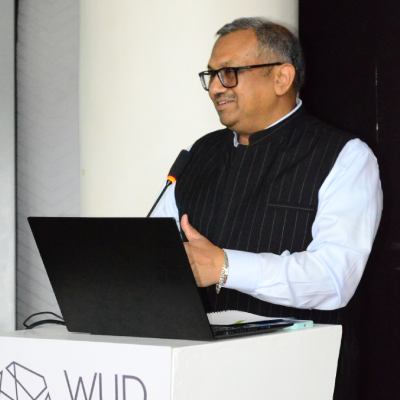
Dr. Sanjay Gupta, VC, World University of Design,
“On National Technology Day, we must recognise that the future of innovation will not be defined only by technological capability, but by how responsibly and inclusively we deploy it. As AI and emerging technologies reshape industries and education, institutions must move beyond rigid frameworks and encourage experimentation, critical thinking, and interdisciplinary learning. India has the talent and academic strength to lead the next wave of innovation, but bridging the gap between ambition and access will require greater institutional trust, policy flexibility, and a conscious effort to align technological progress with societal impact. Responsible innovation is not about slowing progress, but about shaping it with purpose.”
Advanced Analytical Innovation and Localised Technology is Driving Sustainable Industrial Growth in India
Dr Rajeev Gautam, President, HORIBA India,
“National Technology Day is a celebration of India’s growing innovation ecosystem and the transformative role technology plays in nation-building. At HORIBA India, we are proud to contribute to this journey by delivering advanced analytical and measurement technologies that enable quality, precision, sustainability, and innovation across industries.
Backed by HORIBA’s 73 years of global analytical expertise since 1953, we continue to drive technological excellence with a strong focus on reliability, customer-centric innovation, and emerging technologies such as AI-enabled analytics and smart automation.
Over the last two decades in India, HORIBA India has steadily expanded its presence and capabilities to support the country’s rapidly evolving automotive, energy, healthcare, semiconductor, and scientific materials research sectors. Our technologies are designed not only to improve industrial efficiency and accuracy, but also to ultimately serve human lives by enabling safer mobility, cleaner environments, advanced healthcare, and sustainable development.
As India accelerates toward advanced mobility, cleaner energy solutions, and high-precision manufacturing, HORIBA India remains committed to bringing cutting-edge technologies that empower industries with greater efficiency, intelligence, and sustainability. Through enhanced localisation, investment in local talent and manufacturing, and continued collaboration with stakeholders, we aim to contribute meaningfully to the vision of ‘Make in India’ and ‘Atmanirbhar Bharat’ while supporting India’s aspiration to become a global technology leader.”
Strengthening India’s Cybersecurity Self-Reliance Through Responsible and Inclusive AI-Driven Innovation
Govind Rammurthy, CEO & Managing Director, eScan
“India’s technology self-reliance requires building capabilities others won’t share – especially in cybersecurity. AI tools discovering 271 Firefox vulnerabilities demonstrate technology’s dual nature: strengthening defenses or weaponizing attacks depending on control.
Responsible innovation means mandatory disclosure timelines requiring AI researchers to share findings with developers before publication, strict guardrails preventing LLMs from generating functional exploit code, and ensuring open-source models undergo the same scrutiny as proprietary systems.
Inclusive growth happens when cybersecurity innovation protects small businesses and government agencies equally, not just enterprises. India needs indigenous AI-powered security addressing actual Indian threats – regulatory compliance, regional patterns, and local constraints – rather than importing foreign solutions designed elsewhere.”
India’s Deep-Tech Renaissance and the Path to Technological Sovereignty
Prabhat Kumar, Chairman, PanIIT
“Today, we are witnessing a defining moment for India’s technological renaissance. The government’s launch of the National Quantum Mission, alongside the ‘SHAKTI’ policy framework and the historic Rs 1.2 lakh crore R&D allocation, marks a bold leap toward deep-tech self-reliance.
PanIIT Alumni India is an umbrella organization representing alumni of all Indian Institutes of Technology (IITs). The association organises events, seminars and symposiums focussed on technology and entrepreneurship and brings together thought leaders from government, industry, academia, and the IIT alumni community. The PanIIT Bangalore Summit 2026 is scheduled this week. The days of incremental coding and service‑led growth are giving way to an era of fundamental science, hardware, and systems that will define the next half‑century. I urge each one of you to pivot toward deep‑tech research- quantum algorithms, post‑quantum cryptography, advanced materials, and indigenous fab lines. Let us build not just for India, but with India’s intellectual rigour. Let us mentor the next generation, file patents, and commercialise breakthroughs from our labs.
India’s future competitiveness will depend not only on commemorating scientific milestones, but on deepening its commitment to research, innovation, and long-term technological capacity towards Atmanirbharta.”
Engineering Responsibility into AI-Driven Financial Systems
Amit Sharma, Co-founder and Chief Technology Officer, Twid
“When AI systems begin making decisions that affect people’s money in real time, responsibility has to be engineered into the architecture itself. In financial ecosystems, the cost of an error can have huge financial implications. A false fraud flag blocks access to funds, resulting in a poor customer experience. A poorly governed autonomous workflow scales errors instantly. As AI embeds deeper into financial infrastructure, responsibility belongs in system design and architecture. This means building architectures with traceability, continuous monitoring, model governance, and fail-safe mechanisms as foundational components. People trust systems that consistently do what they promise, and engineers build that consistency through principled system design. At TWID, we believe the next generation of fintech engineering in India will be defined by how transparently and responsibly these systems make decisions that impact people’s financial lives.”