

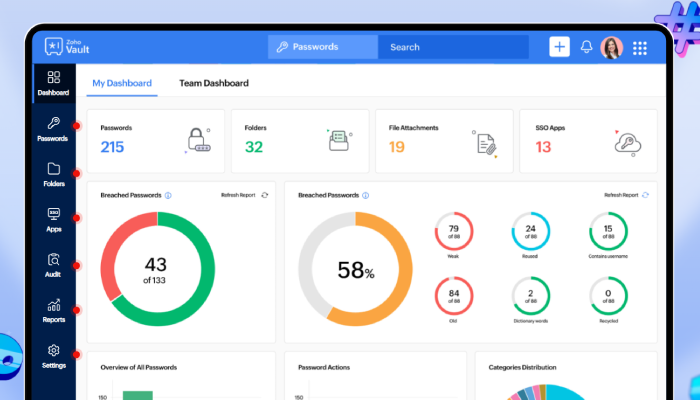
A new cybersecurity report by Zoho Corp. reveals a critical gap in India’s enterprise security landscape, where rapid AI adoption in cybersecurity is outpacing foundational security measures. According to the State of Workforce Password Security Report 2026, nearly one in three Indian businesses lack a Zero Trust security framework, even as 93% believe artificial intelligence will strengthen security systems.
The study, conducted by Tigon Advisory Corp. and commissioned by Zoho Vault, highlights growing reliance on AI-driven security tools, cloud applications, and digital transformation technologies. However, many organisations still struggle with data security, identity access management (IAM), and password security, leaving critical vulnerabilities unaddressed.
Despite 98% of organisations planning to deploy AI-powered cybersecurity solutions, only a small percentage have implemented essential protections such as multi-factor authentication (MFA), strong password policies, and access control systems. This imbalance exposes businesses to heightened risks, especially as employees increasingly use multiple business applications, each requiring secure credential management.
The report also reveals that 34% of organisations have only partial visibility into their business-critical systems and user identities, creating blind spots in enterprise security operations. As AI expands the attack surface, the absence of a Zero Trust architecture—which enforces strict identity verification and least-privilege access—poses a significant risk.
Cyber threats in India are also evolving, with insider threats, ransomware attacks, and human error emerging as the top risks. Malicious insiders alone account for 23% of threats, underscoring the importance of implementing data protection strategies, endpoint security, and internal access controls.
While 87% of businesses consider their security infrastructure future-ready, many still rely on legacy IT systems, limiting their ability to adopt modern cloud security and AI-based threat detection solutions. Key challenges include rising cybersecurity costs, evolving threat landscapes, and a shortage of skilled security professionals.
The findings highlight an urgent need for organisations to strengthen their cybersecurity frameworks by adopting Zero Trust security models, robust credential management, and advanced threat detection systems. As India accelerates its digital transformation journey, building a strong security foundation will be essential to safely leverage the full potential of AI, cloud computing, and enterprise automation technologies.
